
How to collect stakeholder input without the chaos
Streamlined strategies for handling design feedback, coordinating with stakeholders, and improving team collaboration.
SERVICE DESIGN


Stakeholder input is a core part of building great products. However, gathering said input without it becoming a mess of endless feedback, conflicting opinions, and unclear decisions is a common challenge in the product development industry. So, how can UX designers, product managers, and cross-functional teams collect feedback without running into this chaos? Read on for answers to this question and practical steps to follow.
Why stakeholder input matters
Stakeholders know your business goals, so they add important context to your work. They might have eyes on things your team could miss, so ignoring their input is risky. But giving equal consideration to every suggestion, or trying to get feedback without having a proper design feedback process, can be just as harmful. Chances are, priorities will become unclear, confusion enters into the mix, and design decisions suffer. The aim of this article is not to avoid stakeholder collaboration or input, but to introduce a controlled structure to the design feedback process. This way, you include the important voices at the right time and everyone wins. How do you do that?
Set the stage before asking for stakeholder input
Stakeholder collaboration becomes chaotic even before feedback starts rolling in because teams seek their input without first setting context. Do not share a design proposal until you've done the following:
Clarify what stage you're in: What has already been decided, and what has room for change? A good example is when your layout is fixed, but the tone of the copy is subject to edits. Say so up front. This will prevent anyone from giving feedback on things that are already locked and keep discussions focused.
Define who is consulted vs. who decides: Not every stakeholder is a decision-maker. Clarifying roles will help stakeholders feel heard and simultaneously prevent a "too many cooks spoil the broth" situation. So, say you're working across product design, engineering, and marketing departments; everyone must not weigh in on every detail. Set boundaries early to save time.
Set clear expectations: What do you need and when? Inform stakeholders ahead of time when they'll be asked for input or feedback, how long they have to respond, and when decisions need to be finalised. Doing this helps you set clear timelines, build trust, and reduce potential back-and-forth.
How to structure the design feedback process
Sending "Thoughts?" or “What do you think?” alongside a document, thereby offering stakeholders a chance to consider all aspects of your work, is not a feedback technique. In fact, it makes things worse, not better. Guide the feedback from your stakeholders by doing these things:
Use a shared document, such as a Google doc or an easy-to-use form that asks exactly what you would like to know.
Come up with a few relevant questions, for example, Is it consistent with the direction the business wants to go? Has any risk or obstacle slipped our notice? Could anything confuse someone using the product or service?
Try not to make open-ended requests unless discussing options is what you really want.
Always give yourself a specific due date for the project. Allow no more than 2 or 3 days of review time, so no design idea stays stuck for too long.
Transparent communication is essential for stakeholder collaboration
Once you've gotten the feedback or input you need, don't just go ahead with implementing your edits and move on. Take time to reflect on it, then close the loop across boards. Follow these steps:
Summarise themes or decisions in a short Slack update or slide and share with teams. Stakeholders get visibility through this and understand how their input shaped the work, even if you don't implement all their suggestions.
Conclude with stakeholders. If something won't change, explain why. Maybe it conflicts with user data, or causes technical complexities, or doesn’t align with the product direction, say so instead of keeping them uninformed.
Thank your stakeholders for their input. Let them know that it was genuinely considered. Doing these would improve transparency and help you build trust or credibility.
Collecting stakeholder input or feedback might be the crux of stakeholder collaboration, but at the end of the day, you want to create a sense of shared ownership without losing focus on set goals.
Gathering stakeholder input does not have to become chaos
You do not have to lose control over your design project because you seek stakeholder collaboration. When you have a structured plan around it, things go smoother, faster, and more productively. You remain in the driver's seat with the right voices in the passenger's seat.
The key is to start and keep things simple. Keep your asks structured, set boundaries on time, and ensure you close the loop. If you have to manage multiple voices, use a stakeholder input template to keep everything organised and time-structured. Your design feedback process will have less friction and even more consistency.
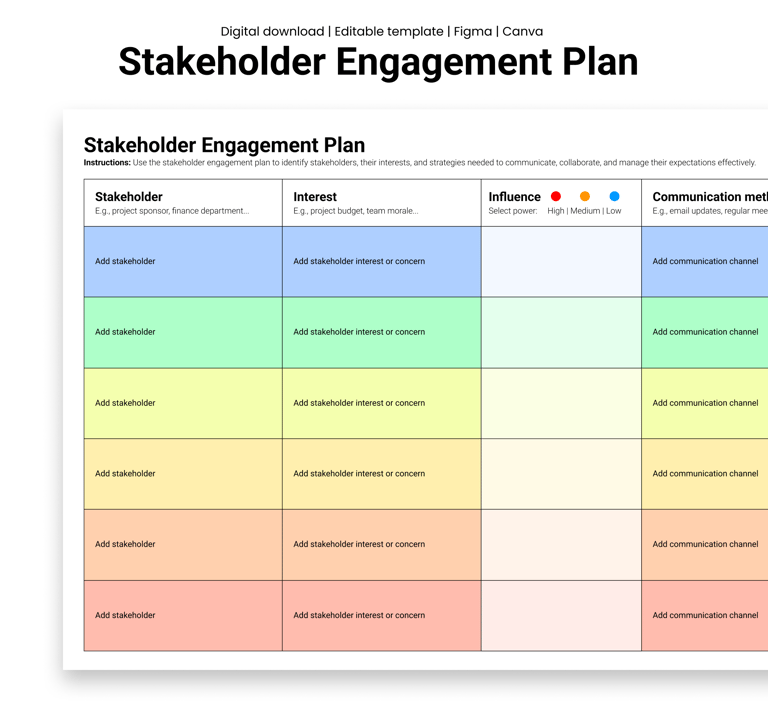
Don't worry about searching for it, you can download our Stakeholder Engagement Plan Template here and start enjoying clear, structured, and chaos-free stakeholder collaboration immediately!
Design resources that deliver results
Copyright © Veilworx Ltd 2024. All rights reserved.
Registered in England and Wales.
Company number: 15318142

Contact
Email: contact@veilworx.com
Address:
Office 9944, 182-184 High Street North East Ham London
E6 2JA
Business hours:
Monday to Saturday: 10am to 6pm
Sun: Closed