
Stakeholder mapping in agile that works for product teams
Learn what stakeholder mapping really means, why it's critical in Agile workflows, and how to implement it without adding heavy processes.
SERVICE DESIGN


Agile is fast; from the name alone, you can tell. So, for teams that operate in this structure, alignment is key. Imagine being on a project, and the product ships after all the hard work. Then, an important stakeholder pops up with feedback that sends everyone back to square one. That can be painful. What if you could avoid having such scenarios play out? If you’ve heard about stakeholder mapping before now, that’s the secret weapon for agile product teams.
But first, what is stakeholder mapping?
Stakeholder mapping is the process of identifying and categorising individuals or groups who have a stake in the success of your product. Simply put, it's figuring out your stakeholders, what they care about, and how involved they should be in your process. For non-agile environments, stakeholder management happens in the longer kick-off phases. Agile, however, doesn't wait. You have shorter feedback cycles, and decisions happen quickly. If you're not mapping stakeholders early enough and as often as needed, you'll set yourself up for slowdowns later.
Who counts as a stakeholder?
Depending on your organisation and product, the most obvious ones would be product owners and business sponsors who handle funding, as well as users and customer reps for whom you're building. But don't forget to factor in your developers, designers, the compliance and legal teams, or even sales and marketing teams. They might seem irrelevant, but they all have a part to play in shaping your product; the cheat code is to discover their different levels of influence and interest in the project and engage with them accordingly, which is why stakeholder mapping matters.
Why agile teams need stakeholder mapping
Agile is a system built on iteration, collaboration, and quick feedback loops for fast decision-making. But those loops only work if you involve the right people at the right time. Stakeholder mapping helps you understand who needs to be involved at every phase, be it discovery, design, testing, or launch. With this knowledge, when blockers come up, and they certainly will, you know who to go to and who to leave out. It also prevents those annoying late-stage surprises from hidden stakeholders, like when an overlooked "Vice President" suddenly appears during UAT (User Acceptance Testing), requesting changes that should've been raised in the first sprint – now everyone is back to square one. Beyond logistics and technicalities, though, stakeholder mapping builds trust and structured collaboration across teams. People who feel seen and involved are more likely to support and willingly push your product.
Best practices for stakeholder mapping in agile teams
For your agile team to get the most value, your stakeholder map needs to be actionable. Start by involving cross-functional team members early. Don't build the map on your own. Pull in your scrum master, product owner, service designers, or anyone who can help you see the bigger picture across the board. You'll be surprised how many stakeholders you can uncover as a team that you’d have ordinarily missed working by yourself. Then use frameworks like the Power/Interest Grid (the Influence vs. Impact Matrix) to categorise stakeholders into four buckets: consult with, keep satisfied, keep informed, and manage closely. It's simple, visual, and gives you a clear sense of how to engage each group.
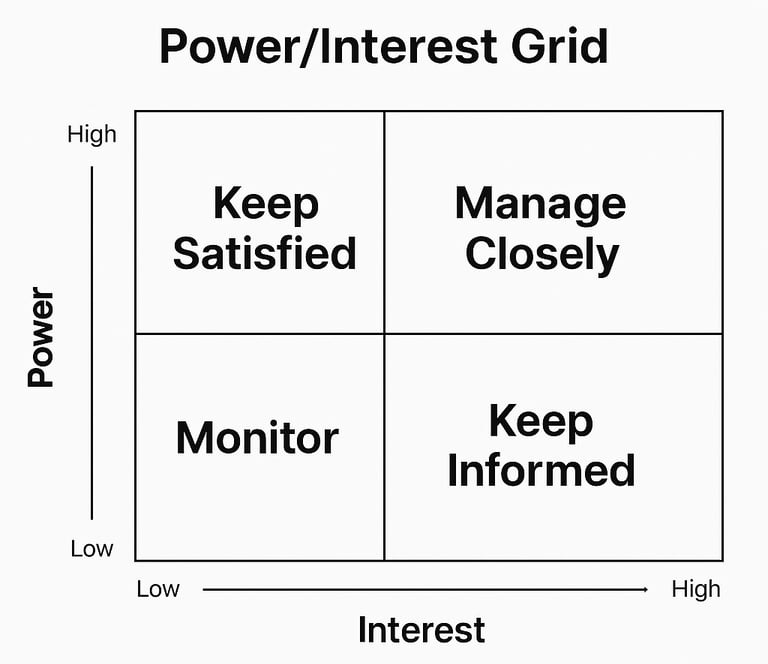
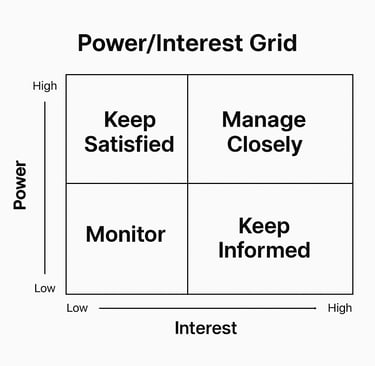
Your map isn’t done just because you drafted it. Update it regularly, just as you would a live document. Look at it again in sprint planning meetings, during retros or after significant changes have been made. Who the stakeholders are and what they require changes frequently in agile, as the project and team may change easily too. Lastly, always ensure that all team members are aware of their tasks and what’s required of them. When this is clear from the jump, friction is less likely.
Tools and templates for agile stakeholder mapping
You don't need fancy tools to make stakeholder mapping work for your team; however, visual aids are preferable as they help with team alignment. Popular tools that we can suggest include Miro (real-time collaboration), Lucidchart (for structured diagrams), and Figma (if you're already working in design).
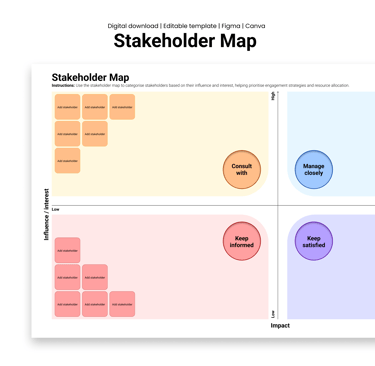
You can also check out Veilworx's Stakeholder Map template, an easy-to-use resource created with agile product teams in mind. Drag, drop, categorise, and THAT’S IT. Whatever tool you decide to use though, keep it lightweight and visual, something the whole team can understand at a glance.
At the end of the day, stakeholder mapping in agile environments is really about creating clarity. When everyone knows who's involved and why, your team spends less time chasing approvals and more time building great products. You reduce bottlenecks, communicate better, make decisions faster, and give your product a smoother path to success.
Now that you know how beneficial stakeholder mapping is for your team, before your next sprint planning session, take 30 minutes to map out your stakeholders. It doesn't have to be perfect from day one; it should just be good enough to get the right people involved at the right time. Implement this today and you'll thank yourself and us, later.

Design resources that deliver results
Copyright © Veilworx Ltd 2024. All rights reserved.
Registered in England and Wales.
Company number: 15318142

Contact
Email: contact@veilworx.com
Address:
Office 9944, 182-184 High Street North East Ham London
E6 2JA
Business hours:
Monday to Saturday: 10am to 6pm
Sun: Closed