
Why wireframes fail without real content (And how to fix it)
Gain insight into content-first design and how it improves user experience through clearer, more usable design.
CONTENT DESIGN


If you’ve worked on a product team before, you know that more often than not, design leads and the UX folk start wireframing early, way before the first word is written. Content gets squeezed in later like an afterthought, sometimes requiring a complete redesign to look presentable. As you read further, we’ll discuss how copy-first UX or content-first design changes the game, why this shift in method matters, and how to make it work in your design workflow.
What is copy-first UX?
Copy-first UX is exactly what it sounds like. It’s a user experience design approach that puts content at the centre of the wireframing process from the start. So instead of designing wireframes with Lorem Ipsum or other placeholder texts and retrofitting real copy later, copy-first UX teams ask questions like “What is the user here to understand, do, or decide?” and “What words do they need to do that well?”. These words become headlines, microcopy, error messages, etc., which then shape the structure of the design.
Why copy-first UX matters
Content-first design starts with clarity. What needs to be said at every point is first mapped out before the part of how it should look. Your layout is important, but you can’t design a great experience if you don’t first know what you’re trying to communicate. This forces you to focus on and solve actual user problems, not just decorate empty boxes. Also, all parties involved are aligned from the jump. So, the writers are composing content with intention, the designers are building with clarity, and the users will find what they came for, fast. Everyone wins.
How content-first changes the wireframing process
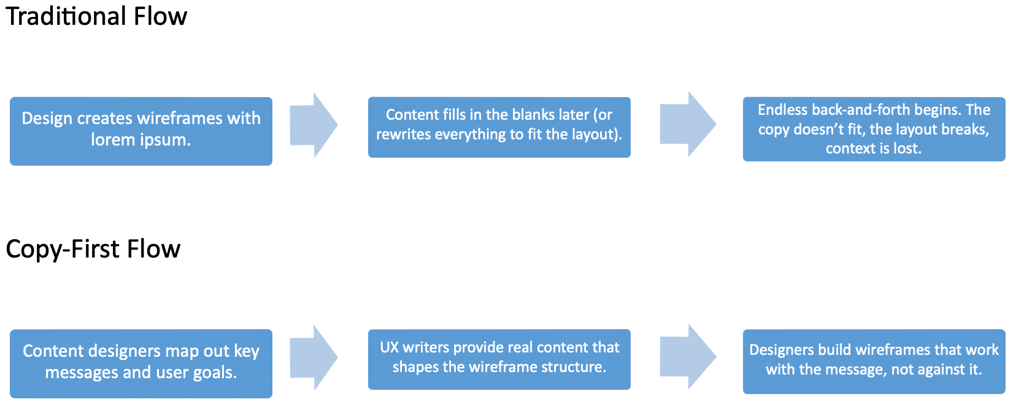
To drive this point home, let’s compare two versions of the wireframing process.
In a traditional flow, wireframes dictate where content goes, but when content leads, you get wireframes that reflect actual user flows. Content becomes the skeleton, and the layout adapts to what the user needs to know or do, so you’ll have CTA buttons where users are ready to act, headlines that guide attention, microcopy that reduces friction, etc. Your user journey becomes easier to plan, all because cohesion was considered from the start.
Benefits of copy-first wireframing
Deciding to switch to a content-first wireframing process will transform your workflow and outcomes in the following ways:
Better alignment between teams: When content and design collaborate from the beginning, both sides understand the “why” behind each element. There is no working in silos, and everyone is clear on what each screen needs to accomplish.
Fewer rewrites and fixes: Designing with real content reduces the number of rounds needed to adjust layouts or tone. The wireframe becomes a solid foundation, and last-minute edits to “make it fit” are eliminated.
Higher content quality and usability: Content-first design ensures writers use the right language in the right place at the right moment in the user journey. That leads to clearer, more actionable, and more inclusive experiences.
Best practices for copy-first wireframes
If you want to try a content-first design process in your next project, note these tips:
Collaborate early and often: Bring UX writers or content designers into discovery meetings, research sessions, and strategy discussions. You want to start with the message, not the mock-up. If content shows up at kick-off, it appears in the final product.
Use wireframing tools that support real content: Tools like Figma, UXPin, and even FigJam make it easy to prototype using real copy from the jump. Skip the lorem ipsum and use rough headlines, CTAs and actual interaction instead. Test the real flow.
Build low-fidelity wireframes with real copy blocks: Don’t wait until high-fidelity mock-ups to test content. Even low-fi wireframes can benefit from content that mirrors user intent and flow. You’ll be able to spot frictions easily and resolve them.
Add annotations and content goals: For each screen or page, note what the content is doing and why. Is it helping a user decide? Act? Navigate? These notes guide the whole team toward shared goals with clarity.
Why copy-first UX works
A copy-first UX approach brings clarity, collaboration, and real user value to the wireframing process. When content plays the primary role in how your site functions, structure follows, the words connect with the end-user more effectively and give them a purpose for interacting with the design in the first place. Copy-first UX has existed as an idea since 2008, when Jeff Zeldman, co-founder and author of A Book Apart, tweeted, “Content precedes design. Design in the absence of content is not design; it’s decoration.” But it may take a while for content-first design to become the norm. In the meantime, you can give it a try and note the difference.
Start your next wireframe with the words. After all, your users come to the site for information, not the best layout. A rough headline, a draft CTA, or a short onboarding message can shape your design.

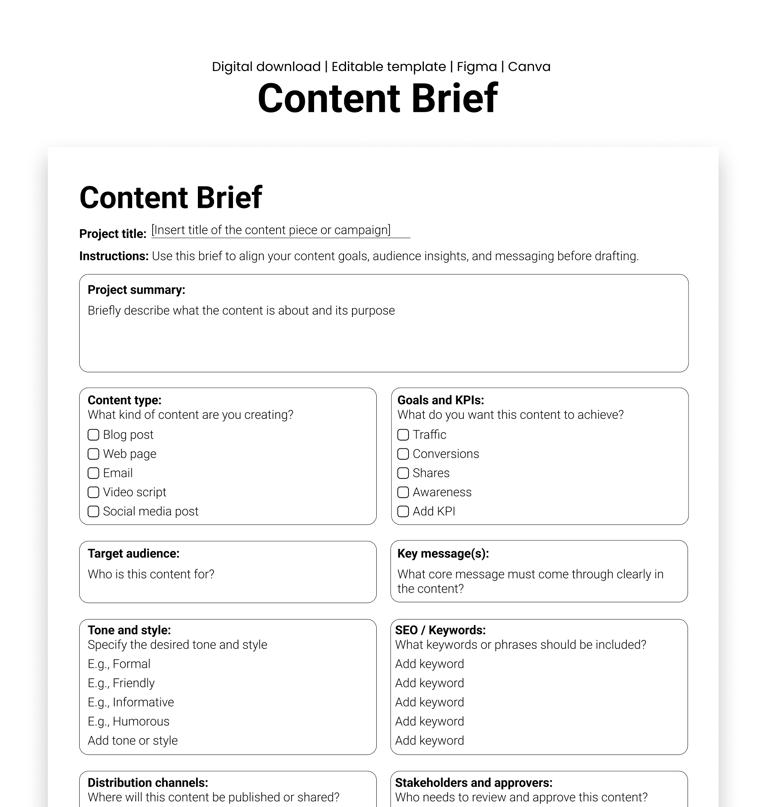
If you’re looking for a head start, check out Veilworx's SEO Content Brief built with content-first UX in mind. They exist to help teams like yours wireframe smarter with real content, right from the beginning.
Design resources that deliver results
Copyright © Veilworx Ltd 2024. All rights reserved.
Registered in England and Wales.
Company number: 15318142

Contact
Email: contact@veilworx.com
Address:
Office 9944, 182-184 High Street North East Ham London
E6 2JA
Business hours:
Monday to Saturday: 10am to 6pm
Sun: Closed